Retaining Wall Services
Retaining Wall Drainage in Escondido, CA
Retaining wall drainage in Escondido addresses water behind and around a wall. Water management is one of the most important factors in how a retaining wall performs, and appropriate drainage planning can help a wall last.
About Retaining Wall Drainage in Escondido
Retaining wall drainage in Escondido addresses water behind and around a wall. Water management is one of the most important factors in how a retaining wall performs, and appropriate drainage planning can help a wall last.
Water Pressure Behind Walls
Water that builds up behind a retaining wall adds pressure the wall wasn't necessarily designed to hold. Over time, that pressure can contribute to leaning, bulging, or failure. Drainage relieves that pressure.
Surface Runoff & Soil Drainage
Surface runoff and the drainage characteristics of the soil behind the wall both matter. A drainage plan considers where water comes from, how it moves through the soil, and how it exits the area behind the wall.
Signs of Trapped Water
Water pooling near the base, wet spots, or a wall that's leaning can indicate drainage problems. If you notice these signs, a drainage assessment can help clarify what's happening.
Site Grading & Drainage
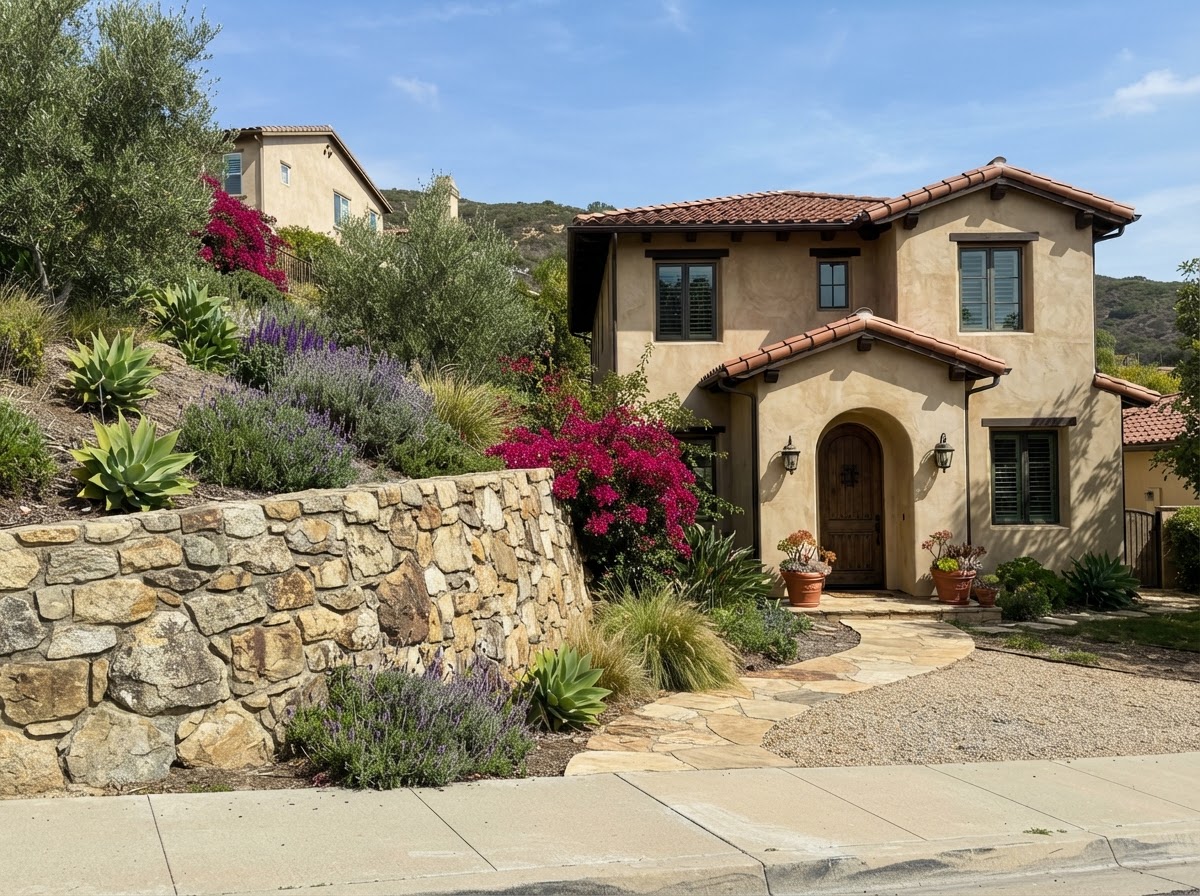
Site grading and drainage work together. The way the ground is shaped around the wall affects where water goes. Appropriate grading and drainage design are often part of a retaining wall project.
Common Considerations
Water pooling near a wall
Leaning or bulging that may relate to water pressure
Runoff flowing toward the wall
Heavy soil that holds water
Planning drainage for a new wall
Relevant Wall Materials
Drainage Aggregate
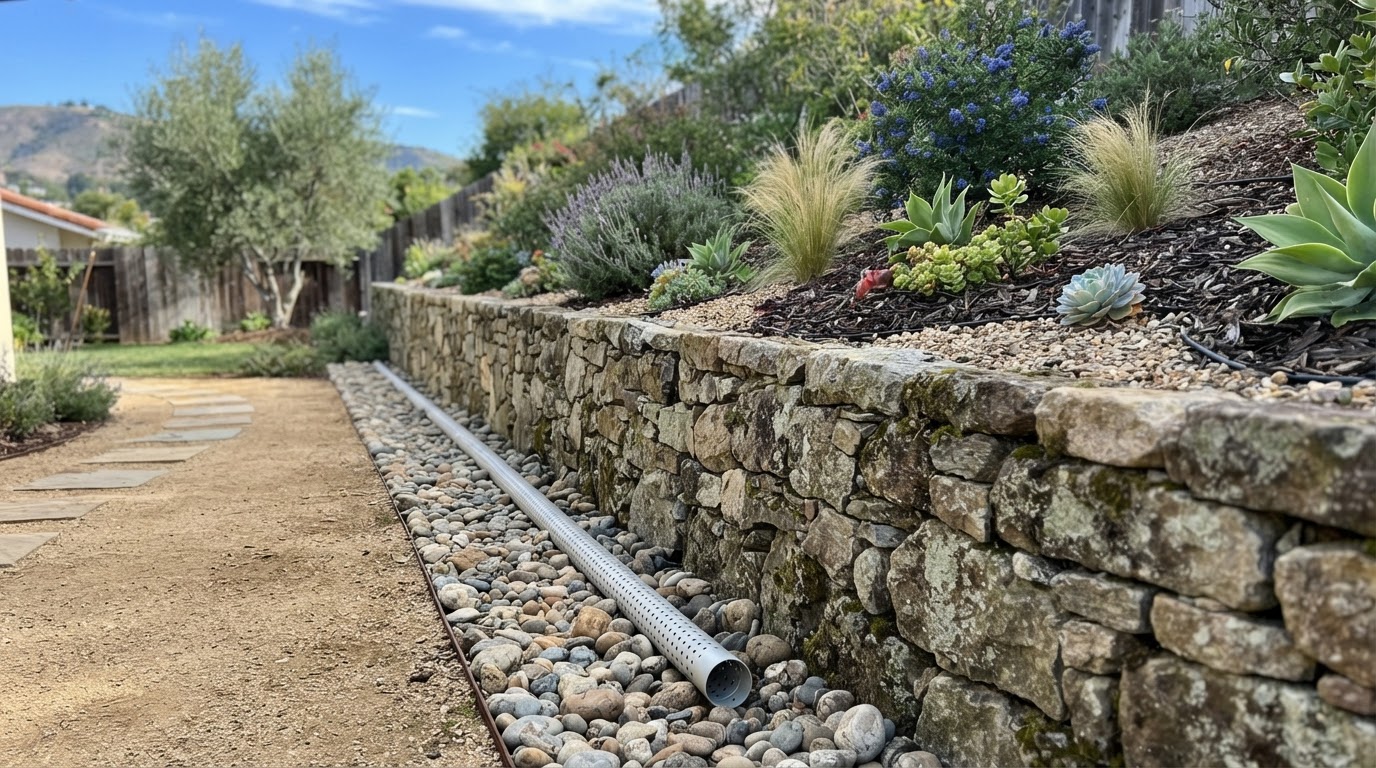
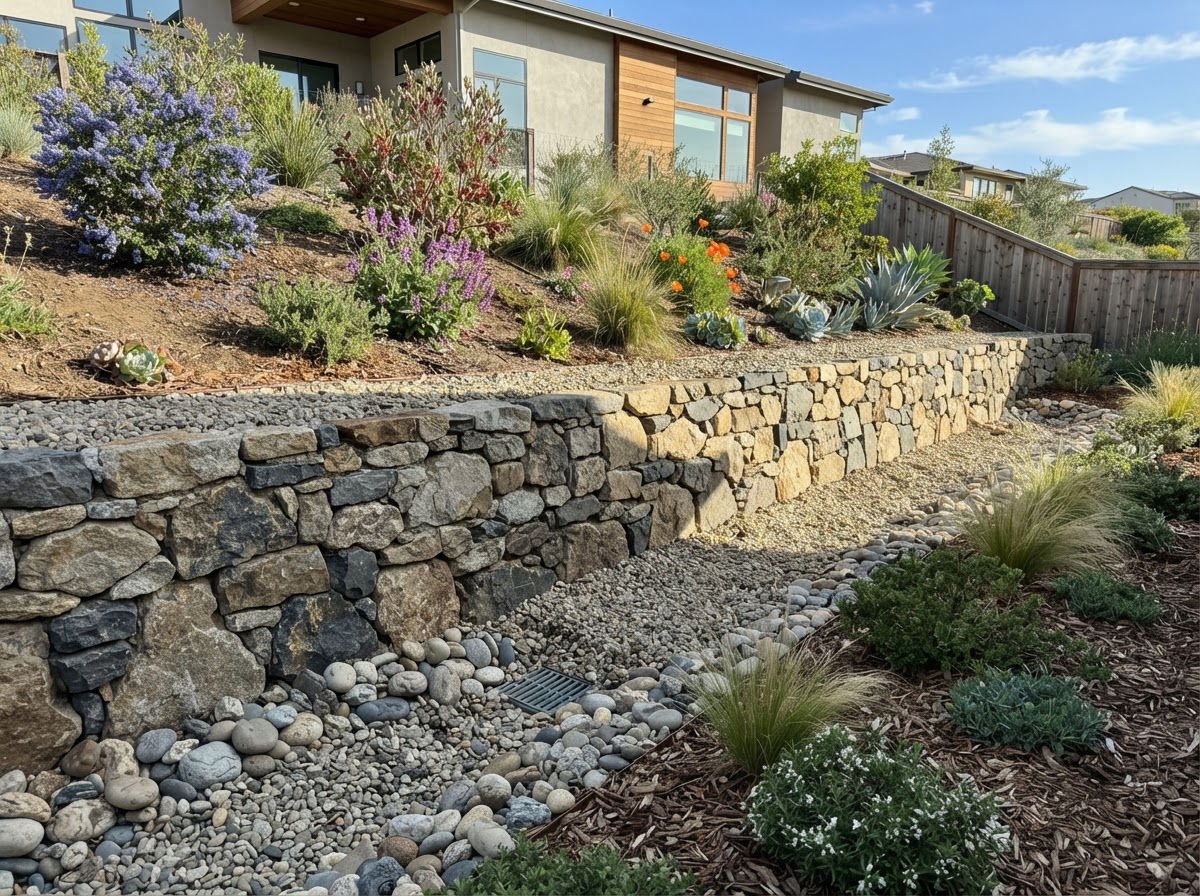
Gravel behind the wall that helps water move to an outlet.
Drain Pipes
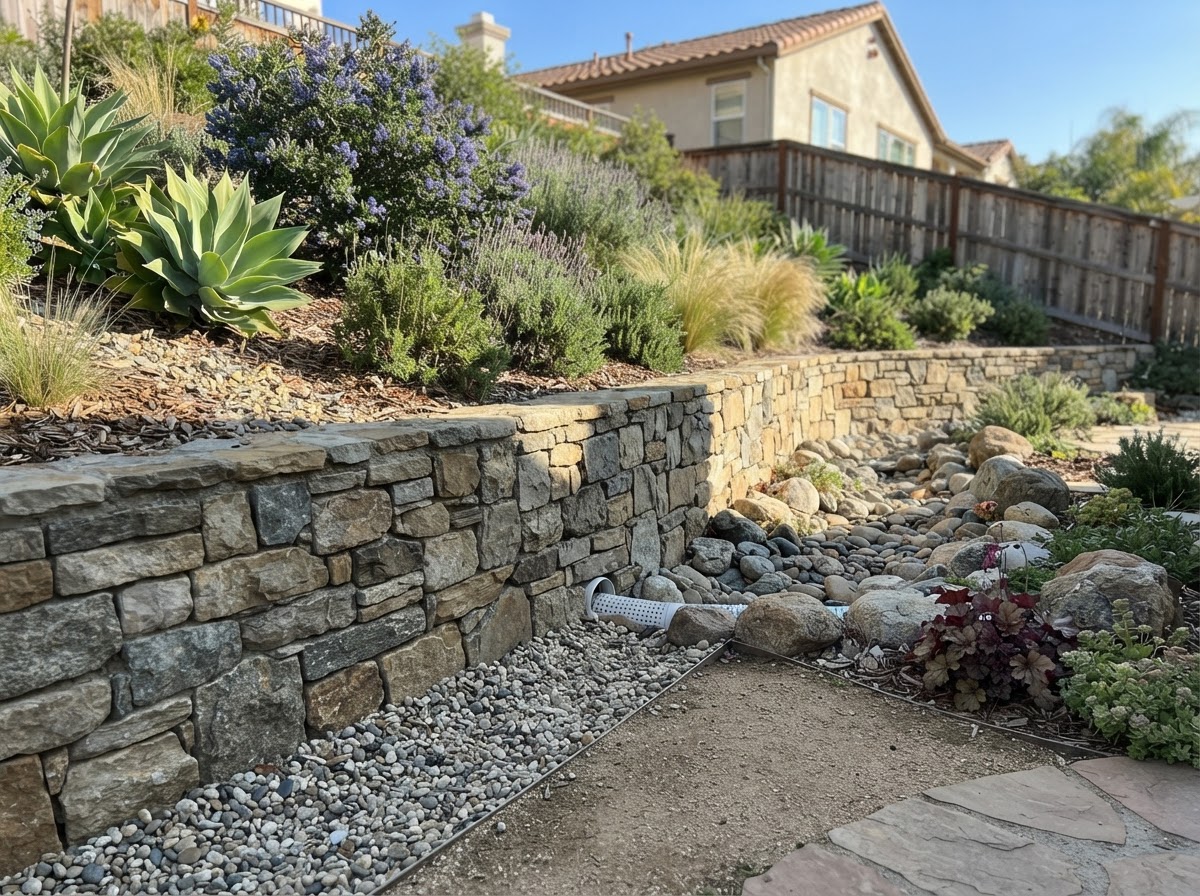
Perforated pipe to collect and route water away from the wall.
Weep Holes
Openings that let water escape through the wall face.
Potential Benefits
- Reduces water pressure behind the wall
- Can address the cause of wall movement
- Helps protect the wall's long-term performance
- Coordinates with site grading for better runoff management
Considerations & Limitations
- Not every wall problem can be solved by drainage alone
- Drainage must be matched to the site's conditions
- Existing walls may need repair alongside drainage work
- Diagnosis should come before a drainage plan
Site Planning Considerations
Source of water (runoff vs. groundwater)
Soil drainage characteristics
Wall condition
Site grading
Outlet path for water
Whether repair is also needed
Project Inquiry Process
Describe the Issue
Tell us what you're seeing — water, movement, or both.
Discuss the Wall & Site
Review the wall, soil, and where water comes from.
Explore Drainage Options
Discuss drainage approaches and whether repair is also needed.
Plan Next Steps
Identify appropriate next actions for your wall's drainage.
Retaining Wall Drainage FAQs
Concerned About Drainage Behind a Wall?
Tell us about the wall and the water issues you're seeing.